
Ask one specific, answerable question at a time. Keep observed behavior separate from your interpretation of it.
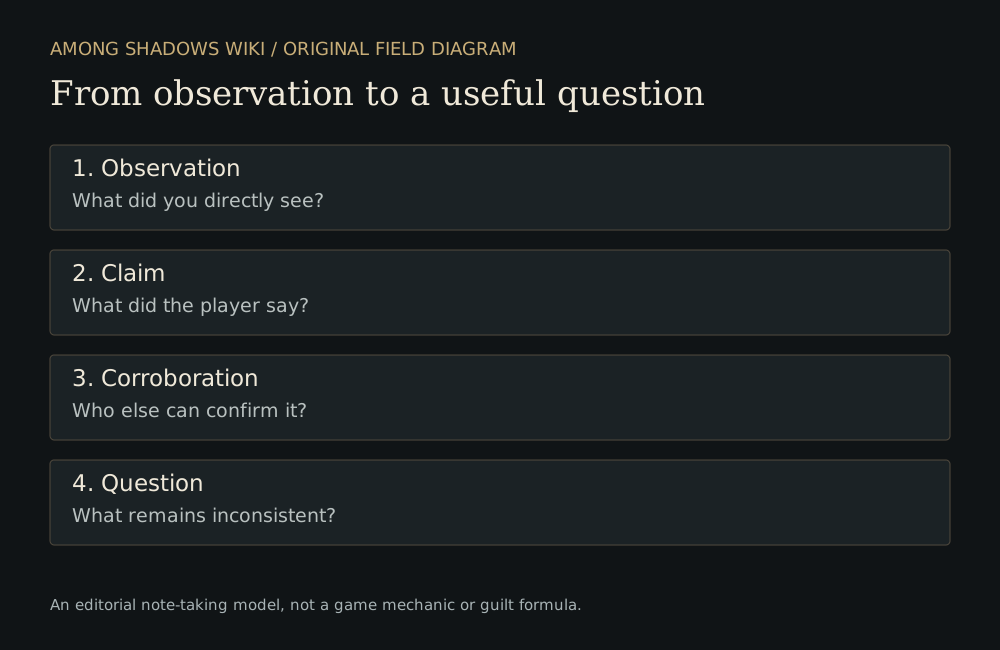
From observation to a useful question
What did you directly see?
What did the player say?
Who else can confirm it?
What remains inconsistent?
Write the observation first
“I saw this player leave the well before the objective changed” preserves a checkable event. “They are definitely an Apostle” replaces that event with a conclusion. Record the location, sequence and witnesses while they are still fresh.
Compare claims with participation
A claimed location matters when it conflicts with another account or an objective timeline. Note who reported each detail. Repeated retelling of one claim is not the same as independent corroboration.
Give contradictions a chance to resolve
Ask what the player meant and whether another observation explains the mismatch. Confusion, an unfamiliar map or a missed interaction can produce honest errors. Keep unresolved questions visible without declaring them proof.
Use a personal score carefully
The notebook stores a suspicion rating entered by you. It never computes guilt, reads game data or assigns a formula to a player. A rating is a memory aid; the evidence field should explain why you chose it.
Judgment Notebook
Keep your own notes. Saved in this browser.
Leave these entries open.
These details need current first-party or live-build evidence before they become reliable advice.
- Vote thresholds and abstention
- Who can call Judgment and when
- Penalties, elimination and appeal rules